Combat sports did not need a massive pay-per-view to give us a consequential weekend.
Lauren Price completed one of the fastest championship climbs in recent boxing history and became Wales’ first undisputed champion of the four-belt era. Navajo Stirling knocked out a former UFC champion and created an unusual problem at light heavyweight, where the champion happens to be his teammate. Gabriela Fundora continued building a résumé that deserves serious pound-for-pound consideration, while Amari Jones took another important step toward the middleweight championship opportunity he has been chasing.
UFC Qatar also gave us something considerably different. Dan Hooker rediscovered the disciplined fighter beneath all the chaos that has defined much of his career, while Brian Ortega recognized that his own career had reached its ending.
Some weekends give us great fights. This weekend gave us careers moving in completely different directions.
Here are five things Fight Week learned from this weekend’s fights.
1. Lauren Price Has Become One of Boxing’s Most Accomplished Champions Almost Overnight
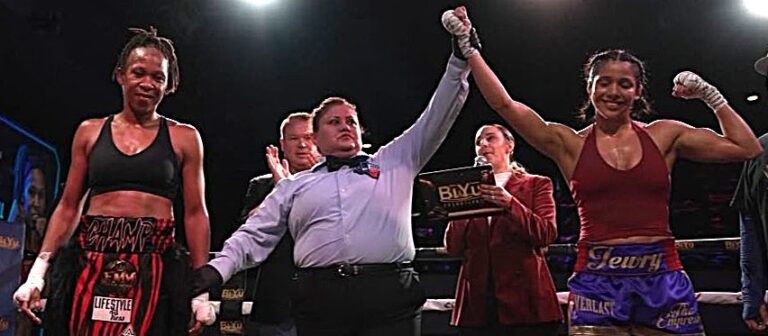
Lauren Price entered Friday night in Cardiff already holding three of the four major welterweight championships. She left with all of them.
Price defeated Michaela Kotaskova by unanimous decision, with all three judges scoring every round 100-90, adding the vacant WBO championship to the WBA, WBC and IBF belts already in her possession. The victory made Price the undisputed welterweight champion and the first Welsh boxer to become undisputed during boxing’s four-belt era.
What makes the accomplishment remarkable is how quickly Price has reached this point. Professional boxing usually makes fighters spend years navigating sanctioning bodies, mandatory challengers, promotional politics and carefully arranged title opportunities. Price has largely skipped the traditional waiting period because every time the competition has increased, she has looked capable of handling it.
Friday was another example. Kotaskova entered with legitimate ambition, but Price never allowed the fight to develop into something competitive. She controlled distance, dictated the tempo and consistently landed the cleaner work. A 100-90 sweep across three scorecards can sometimes hide close rounds. This one mostly reflected what actually happened.
Price now finds herself in the unusual position where simply defending the belts may not be enough to move her career forward. She has already accomplished the primary objective available within her division. That means the conversation inevitably shifts toward bigger names, bigger events and potentially bigger weight classes. She has already mentioned Claressa Shields, and whether that particular fight becomes realistic or not, Price should now be thinking in those terms.
There is also something important about becoming undisputed without needing a controversial decision, a favorable hometown scorecard or an opponent fading late. Price did it comprehensively. What we learned is that Lauren Price is no longer simply one of boxing’s rising female stars. She has reached the point where the sport should start asking how high her ceiling actually is.
2. Navajo Stirling Just Became a Serious Problem at Light Heavyweight
Navajo Stirling entered UFC Qatar unbeaten and highly regarded.
He left looking like a possible future champion.
Stirling knocked out former UFC light-heavyweight champion Jiří Procházka with a right hand at 4:58 of the second round, improving to 12-0 and extending a remarkable run that now includes four consecutive stoppage victories in 2026. The UFC itself described the performance as Stirling’s arrival into title contention, and after Saturday there is little reason to argue with that assessment.
The patience was as impressive as the knockout.
Procházka has built much of his success around forcing opponents into unusual fights. His stance changes, unpredictable entries and willingness to attack from strange angles can make technically sound fighters abandon their own structure. Stirling refused to play along. He stayed composed, waited for his opportunities and eventually found the opening that ended the fight.
That maturity matters because Stirling is still relatively inexperienced compared with many fighters operating near the top of the UFC rankings. He did not need years inside the promotion before beating an established former champion. He simply needed the opportunity.
Now comes the complicated part.
The UFC light-heavyweight champion is Carlos Ulberg, Stirling’s City Kickboxing teammate. That creates an awkward championship picture if Stirling continues climbing. Fighters regularly say they will not compete against teammates, but championships have a way of making those declarations more complicated.
The UFC does not have to solve that problem immediately. Stirling could fight another leading contender first, especially given how quickly his rise has occurred. But the promotion can no longer treat him as someone developing toward contention. He is already there.
The result also creates a very different question for Procházka. This was the first two-fight losing streak of his career, and both defeats have now come against fighters from the same team. His aggressive, unconventional style remains dangerous, but Saturday offered another example of how costly the defensive openings within that style can become against increasingly disciplined opponents.
What we learned is that Navajo Stirling has graduated from prospect to legitimate UFC title threat. The only question is whether his path eventually leads toward an opponent he trains beside.
3. Gabriela Fundora Is Becoming One of Boxing’s Most Complete Champions
Gabriela Fundora did not get the knockout she wanted Friday night.
She may have produced something more useful.
Fundora retained her undisputed flyweight championship with a dominant unanimous decision over Jasmina Zapotoczna, winning by scores of 100-88, 99-89 and 98-90. She dropped Zapotoczna twice and unofficial punch statistics credited Fundora with landing 194 punches compared with only 42 for the challenger.
That kind of statistical domination is impressive, but the early rounds were important because Zapotoczna did not simply stand in front of Fundora and allow herself to be overwhelmed. She moved, changed distance and forced the champion to work before Fundora eventually began closing the space more effectively.
Fundora’s body attack became particularly important as the fight progressed. Once Zapotoczna’s movement slowed, Fundora’s size, reach and pressure began dictating nearly every exchange. The knockdowns in the seventh and eighth rounds felt like the natural result of damage that had been accumulating rather than sudden moments appearing from nowhere.
That is what increasingly separates Fundora from fighters who simply possess physical advantages in lower weight divisions. Being unusually tall for flyweight helps, but knowing how to use that size is something different. Fundora can box at range, apply pressure and attack the body when opponents attempt to survive by moving.
She is still only 24 years old.
That may be the most interesting part.
Fundora is already undefeated, undisputed and producing performances like this while theoretically still several years away from her athletic prime. There are obvious challenges associated with maintaining 112 pounds as she matures physically, and moving divisions eventually seems inevitable.
If that happens, the opportunities become considerably more interesting. Instead of spending the next several years defending the same four belts against increasingly familiar challengers, Fundora could begin chasing championships through multiple divisions.
What we learned is that Gabriela Fundora should no longer be discussed only as the best flyweight in women’s boxing. She is building a legitimate pound-for-pound argument, and at 24 she may only be getting started.
4. Amari Jones Has Reached the Point Where the Next Fight Needs to Be for a World Title
Amari Jones has spent 2026 knocking down every obstacle between himself and a middleweight championship.
DeAundre Pettus became the latest.
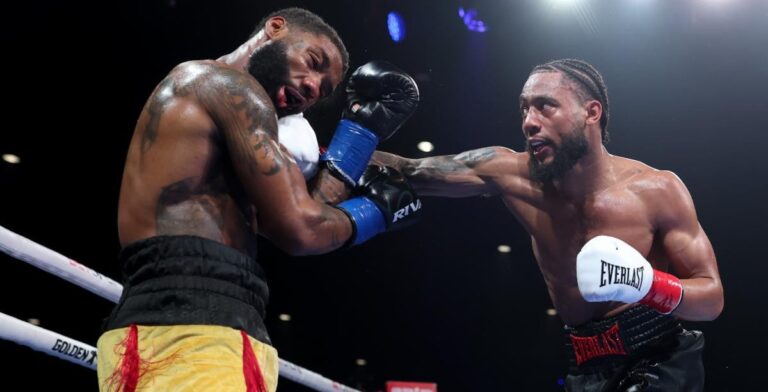
Jones stopped Pettus at 1:05 of the eighth round Friday night in Indio, improving his unbeaten record while becoming the first fighter to stop Pettus. Jones controlled the fight statistically as well, outlanding Pettus 163-48 before the finish.
This was exactly the kind of fight that can become dangerous for a highly ranked contender.
Jones entered as the IBF’s No. 1 challenger and already had a championship opportunity effectively waiting for him. Pettus therefore represented far more risk than reward. If Jones won, most people would say he did what was expected. If he lost, the championship opportunity could disappear.
Instead of fighting cautiously to protect his ranking, Jones approached the fight like someone determined to prove he belonged at the next level.
His pressure steadily increased as Pettus became less effective, and the finish reinforced something that has become increasingly difficult to ignore: Jones carries enough offensive firepower to create problems for anyone at middleweight.
The championship picture should become clearer very soon. IBF champion Aaron McKenna is scheduled to defend against Jevgenijs Aleksejevs on December 4, and Jones remains positioned as the mandatory challenger. That means there should be very little reason for another stay-busy fight after Friday.
At some point, developing prospects have to stop proving they are ready and actually receive the opportunity they have been developing toward.
Jones has reached that point.
He has beaten former champion Vincenzo Gualtieri, remained undefeated and now stopped an opponent who had never previously been stopped. Another developmental matchup would answer very little.
What we learned is that Amari Jones should enter 2027 preparing for a world championship fight. Whether Aaron McKenna still holds the belt or somebody else does, Jones has earned the opportunity to find out whether “The Reaper” is ready to become a champion.
5. Dan Hooker Won the Fight Brian Ortega Realized He No Longer Wanted to Fight
Not every important lesson from the weekend involved somebody beginning a championship run.
Sometimes the most important moment is recognizing when one has ended.
Dan Hooker defeated Brian Ortega by unanimous decision at UFC Qatar, winning 30-27 on all three scorecards. Hooker fought with considerably more discipline than we usually associate with him, using his jab, kicks and range rather than allowing the fight to become another unnecessary brawl. The victory ended a three-fight losing streak and gave Hooker his first win in more than two years.
That matters for Hooker because his career has often been defined by his willingness to make difficult fights even harder. Few fighters have been more willing to stand in front of dangerous opponents and trade simply because the chaos appeals to them.
Against Ortega, Hooker finally appeared interested in making the fight easier.
He defended takedowns, maintained distance and consistently landed the cleaner offense. Afterward, he acknowledged that he had been fighting “dumb” and needed to fight smarter. At 36 and after the punishment he has absorbed throughout his career, that realization could extend his relevance considerably.
The more emotional story came after the decision.
Ortega removed his gloves inside the Octagon and announced that he believed his fighting career was over. The former featherweight title challenger explained that he no longer possessed the same internal drive that had fueled him through years of competition. The loss dropped him further into a difficult stretch that had already included numerous injuries, failed weight cuts and four defeats in his previous five appearances entering Qatar.
There was something fitting about the contrast.
Hooker entered the evening attempting to prove there was still another chapter worth writing. Ortega entered hoping a move to lightweight could begin a new one. Three rounds later, Hooker had rediscovered a path forward while Ortega realized he no longer needed one.
For Ortega, retirement should not be viewed as failure. He fought for the UFC featherweight championship twice, survived one of the most dramatic title fights in recent memory against Alexander Volkanovski and spent more than a decade competing inside the UFC.
For Hooker, the lesson is different. The fighter who loves chaos may have discovered that intelligence can be just as entertaining when it keeps a career alive.
What we learned is that UFC Qatar represented two completely different forms of clarity: Dan Hooker remembered how he needs to fight at this stage of his career, while Brian Ortega recognized that he no longer needed to fight at all.
Fight Week Fighter of the Week: Lauren Price
Navajo Stirling delivered the weekend’s most dramatic MMA statement. Gabriela Fundora continued strengthening her position among boxing’s pound-for-pound best, while Amari Jones made another convincing argument that his next fight should be for the IBF middleweight championship.
But Lauren Price is the Fight Week Fighter of the Week.
Price entered Friday night three belts deep into a championship collection and left with the one that completed it.
She did not squeeze past Michaela Kotaskova in a difficult decision or rely upon a late surge in front of a hometown crowd. Price won every round on every official scorecard and became the undisputed welterweight champion.
More importantly, she made history.
Price became the first Welsh boxer to hold all four major world championships simultaneously during the four-belt era, adding another distinction to a career that already includes Olympic gold.
Undisputed championships are supposed to represent something definitive. They answer the question of who controls a division.
At welterweight, that question now has a very simple answer.
Lauren Price.
The interesting part is that becoming undisputed does not feel like the conclusion of her career. It feels like the moment the possibilities become considerably larger.
Fight Week Fighter of the Week: Lauren Price.